Skip to content

Introduction: The Most Important Years of Learning
There’s a reason many experts call the years from birth to age five the “magic years.” During this short window, your child’s brain is growing and changing faster than it ever will again. Every coo, every question, every cuddle and song is helping build the wiring of their mind.
As a parent, you might wonder: When should I start thinking about an early childhood curriculum? Is preschool early enough? Won’t they learn what they need in kindergarten?
These are honest questions. I’ve heard them from hundreds of families in my three decades as a classroom teacher, reading interventionist, and literacy consultant. What I want you to know is this: the right time to start thinking about an early childhood curriculum is now—wherever “now” happens to be for you and your child.
I’m L.T. Lyles, founder of Reading Ready Foundations and creator of Jumpstart Kinder. My journey into early reading at home began when my daughter asked me to teach her baby to read. Sitting on the floor with my grandson, I used the same research-based methods I had used with students for years—only gentler, shorter, and more playful. By two and a half, he was reading. Today, at three and a half, he’s reading, writing, and spelling with confidence.
The same approach that worked for him is at the heart of the early childhood curriculum I’ve developed for families like yours. In this article, we’ll talk about why the early years matter so much, what brain research tells us, and how to choose or use an early childhood curriculum that respects both the science and the magic of this season.
What We Mean by “Early Childhood Curriculum”
Let’s keep the definition simple. An early childhood curriculum is a thoughtful, intentional plan for supporting your child’s development during the years when their brain is most open to learning. It is not about pushing academics too early or creating school-like pressure at home.
Instead, a strong early childhood curriculum:
• Aligns with how young children naturally learn—through play, relationships, repetition, and joy.
• Fits into real life: your routines, your home, your family culture.
• Focuses on building foundations, not rushing to advanced skills.
A quality early childhood curriculum usually touches several key areas:
• Language and literacy: vocabulary, listening, phonemic awareness (hearing sounds in words), letter knowledge, and early comprehension.
• Thinking skills: problem-solving, memory, cause and effect, early math ideas.
• Social and emotional growth: confidence, empathy, self-control, taking turns, handling feelings.
• Physical development: fine motor skills (like writing and drawing), gross motor skills (running, jumping, climbing), and sensory exploration.
The best early childhood curricula don’t treat these areas as separate boxes. Young children learn in whole experiences. For example, reading a story together can support language, thinking skills, emotions, and even motor skills (turning pages, pointing to pictures) all at once.

The Brain Science Behind the Magic Years
Understanding what’s happening inside your child’s brain from birth to five can transform the way you see everyday moments.
Synaptic “Explosions”
At birth, your baby’s brain has billions of brain cells (neurons), but many of the connections between them still need to be formed. These connections—called synapses—are created through experience. Every time your child hears your voice, sees your face, plays with a toy, or solves a little problem, neurons are firing and wiring together.
In the first few years, the brain creates more than a million new connections every second. By age three, your child’s brain is actually more active than an adult’s. An early childhood curriculum takes advantage of this incredible growth by giving your child rich, repeated, meaningful experiences to “feed” their brain.
Windows of Opportunity
Researchers have found that certain skills have “sensitive periods”—times when the brain is especially ready to develop them.
For language, this window is wide open from birth through about age five or six. During this time, children can:
• Absorb new sounds and words quickly
• Learn more than one language with ease
• Build the deep wiring that supports talking, listening, and later, reading
This has big implications for early literacy. Reading doesn’t truly begin in kindergarten when your child first sees a worksheet. It begins in infancy, with the sounds of language, the back-and-forth of conversation, and the stories and songs they hear long before formal letters are introduced.
A well-designed early childhood curriculum leans into this window. It doesn’t demand that toddlers sit still and read, but it surrounds them with language, sound play, stories, and print in ways that are natural, engaging, and fun.
Building the Architecture That Lasts
In these early years, the brain isn’t just growing; it’s building “architecture.” The circuits built now form the base for all future learning.
Imagine building a house. The foundation doesn’t decide what color you paint the rooms, but it does decide whether the house can stand strong. In the same way, a child who enters kindergarten with:
• Strong oral language
• A rich vocabulary
• Good phonemic awareness (hearing and playing with sounds)
• Positive feelings about books
has a strong foundation for meeting the demands of any kindergarten or early childhood curriculum.
When those foundations are weak or missing, it doesn’t mean a child can’t learn—it means they will often work much harder to keep up once school begins.

What Brain Research Tells Us About Starting Now
“Use It or Lose It”
The brain creates far more connections than it will ultimately keep. Over time, it prunes away those that are not used and strengthens those that are. This is called synaptic pruning.
What does that mean for you?
• Experiences your child has over and over—talking, listening, playing with sounds, being read to—become strong, lasting pathways.
• Experiences they rarely or never have may not leave deep traces.
An early childhood curriculum gives you a gentle plan for repeating the right kinds of experiences so your child’s brain holds onto the skills that matter most for reading and learning.
The Vocabulary Gap
Studies have found huge differences in how many words children hear in their first years of life. Children in language-rich homes hear far more words than those in quieter or more stressed environments. These differences in early vocabulary have been linked to later reading and school success.
Here’s the encouraging news:
• You don’t need fancy materials to build vocabulary.
• You do need conversation, books, songs, and a parent who talks with their child, not just to them.
An early childhood curriculum can help by giving you ideas for what to talk about, which books to choose, and how to build language naturally into routines like meals, bath time, and errands.
The Reading Brain Is Not Automatic
Spoken language develops naturally when children are exposed to it. Reading does not work that way. The brain was not originally “built” to read. To become readers, children must build new connections between different parts of the brain—those that process visual symbols, those that process sounds, and those that handle meaning.
This is why explicit instruction matters, even in early childhood. A strong early childhood curriculum doesn’t just hope children will “pick up” reading. It gently prepares the brain by:
• Teaching letter names and sounds side by side — creating an immediate, lasting connection between symbol and sound
• Developing auditory skills through sound play — rhyming, blending, and segmenting words
• Surrounding all of this with rich stories and language — because vocabulary and comprehension grow through books and conversation
What Effective Early Literacy Looks Like in Practice
So what does all this look like in your living room or at your kitchen table? An effective early childhood curriculum for literacy usually includes:
Letter Knowledge and Sound Play: Two Sides of the Same Coin
In Jumpstart Kinder, we don’t separate sound work from letter work. Instead, we weave them together from the very first lesson—because that’s how reading actually works.
When your child meets the letter “M,” they don’t just see it—they experience it:
• They see the letter shape (visual)
• They hear its sound /m/ (auditory)
• They say the sound themselves (oral)
• They move with a fun action (kinesthetic)
All of this happens in one playful, three – five minute lesson.
But here’s what makes our approach different: The sound play never stops. Throughout the program, your child continues to:
• Play with rhymes and rhythms
• Notice words that start with the same sound
• Blend sounds orally
These aren’t separate “pre-reading” activities done in isolation. They’re woven into every stage of learning—alongside letters, between lessons, and during the thousands of small moments that make up your day.
This integrated approach builds a brain that understands reading from the inside out: sounds give meaning to letters, and letters give power to sounds. Neither stands alone.
Print Awareness
Children also need to learn how books and print “work.” That includes understanding that:
• Print carries meaning
• We read from left to right and top to bottom
• Books have a front and back, pages turn in order
You build this by pointing to words as you read, talking about the cover, and letting your child help turn pages. Many early childhood curricula include specific suggestions for these small, powerful habits.
Vocabulary and Comprehension Through Conversation
Before a child can read on their own, they can still become strong thinkers and listeners. When you:
• Talk about new words in a story
• Ask, “What do you think will happen next?”
• Connect the story to their life (“This reminds me of when we went to the park…”)
you are building comprehension and vocabulary that will support them through school and beyond.
An early childhood curriculum that emphasizes talk, questioning, and connection—rather than just worksheets—sets your child up to be a thoughtful reader, not just a fast one.

The Jumpstart Kinder Story: An Early Childhood Curriculum in Real Life
Everything I’ve shared so far is the research behind what became Jumpstart Kinder—my early childhood curriculum designed for ages 0–5. But the heart of it is very personal.
It started when my daughter asked me to teach her son to read, my grandson.
I took everything I’d learned over 30 years:
• Teaching kindergarten and first graders to read
• Supporting struggling readers as an intervention specialist
• Coaching teachers and schools as a regional literacy consultant and Title 1 consultant
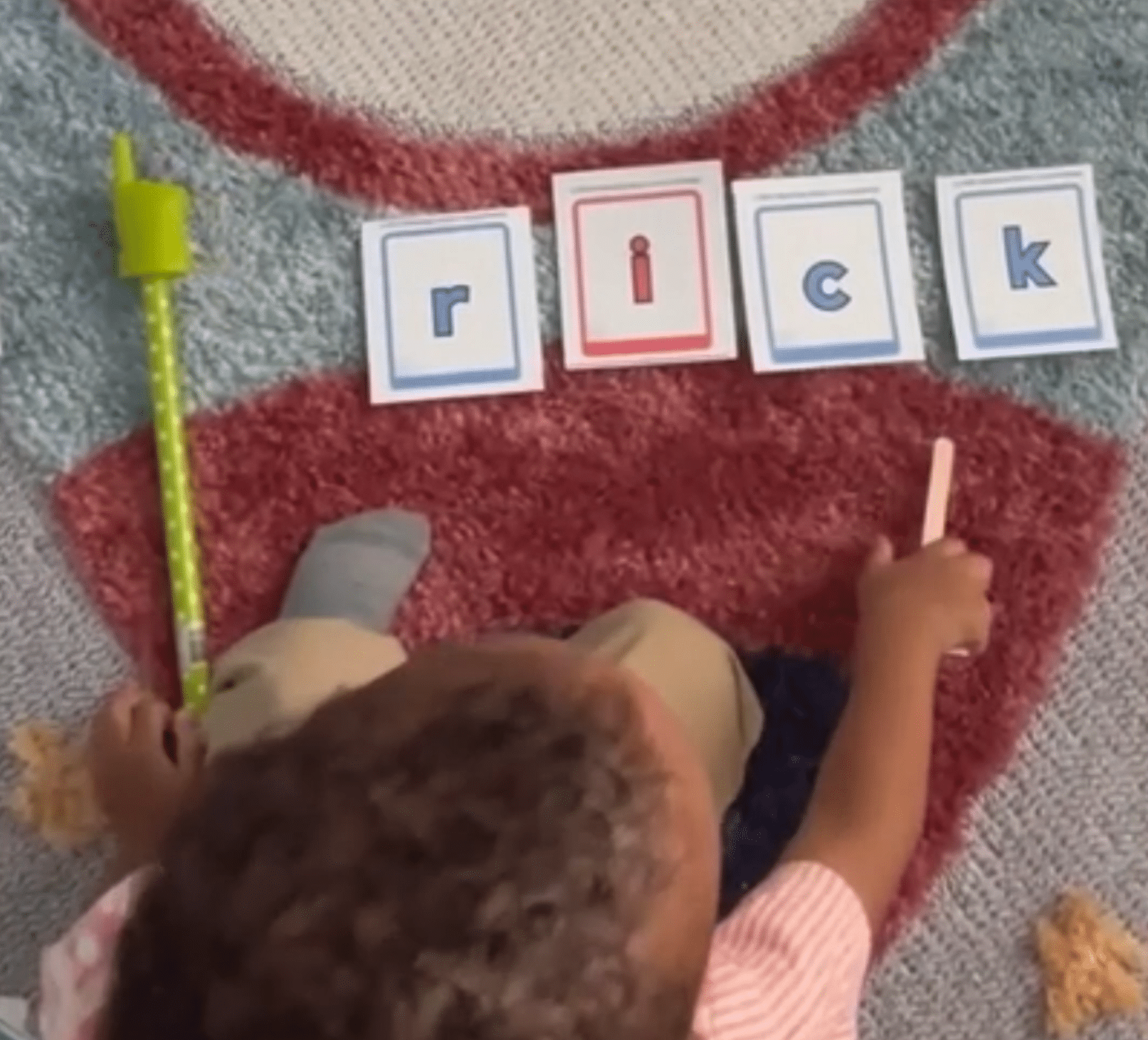
Then I adapted it for his age—making lessons short, playful, and gentle. We used songs, puppets, movement, and my color-coded blending cards (red for vowels, blue for consonants) that he could hold and slide together to make words.
By two and a half, he was blending sounds and reading simple words. By three and a half, he was reading, writing, and spelling with confidence.
Jumpstart Kinder grew out of that experience—a research-based, love-powered early childhood curriculum that any parent can use at home.
What Makes Jumpstart Kinder Different
Here are a few things that set the Jumpstart Kinder early childhood curriculum apart:
• Letters and sounds together from day one
Your child learns letter names and sounds at the same time, so they immediately understand what each letter does, not just what it’s called.
• Sound skills are woven in, not tacked on
Phonemic awareness (sound play) isn’t a separate unit. It’s blended into every part of the curriculum so your child is always hearing, saying, and playing with sounds as they learn letters.
• Multi-sensory learning
Children don’t just hear; they see and touch with flashcards, games, puzzles, and other multi-sensory activities.
• A step-by-step mastery sequence
The early childhood curriculum follows a clear path:
-
Sound play and letter-sound introduction
-
Blending sounds into words
-
Reading simple decodable books
-
Beginning spelling and writing
• Flexible pacing
You can repeat lessons as needed, slow down, or move faster depending on your child. There are no deadlines—only progress.
This kind of early childhood curriculum is designed to meet your child where they are and move at their pace.
For Every Kind of Learner
A common worry parents have is: “Will this work for my child?”
A flexible early childhood curriculum like Jumpstart Kinder can support:
• Advanced or eager learners
Move quickly when they are ready. The variety of activities keeps even curious, fast-moving children engaged.
• Children who need more time or support
The multi-sensory approach is especially helpful for children who may be at risk for reading difficulties, including dyslexia. Early, gentle practice can make a huge difference later.
• Everyone in between
Because the lessons are short and repeatable, you can easily adjust. There’s room to pause, revisit, or celebrate small steps without pressure.

Your Role: Calm Guide, Not Perfect Teacher
The most important message I want to leave you with is this:
You are exactly the right person to guide your child through an early childhood curriculum.
You don’t need:
• A teaching degree
• Fancy supplies
• Hours of daily instruction
You do need:
• Love
• Patience
• A clear, trustworthy roadmap
Jumpstart Kinder provides that roadmap. It gives you:
• Simple, scripted lessons so you always know what to say and do
• Short video demonstrations and audio support so you can see and hear each activity
• Printable materials that are ready to use
• A clear sequence that builds step by step
Your job is to bring the warmth, encouragement, and consistency that only you can offer.
The Long-Term Gift of an Early Childhood Curriculum
A strong early childhood curriculum does more than get a child “ready for kindergarten.” It builds habits and confidence that last. Children who start school with solid foundations in sounds and letters:
• Spend less energy struggling to decode words
• Have more energy left for understanding and enjoying what they read
• Are more likely to see themselves as capable, successful learners
Children who receive early, systematic support often avoid the frustration and self-doubt that can come with falling behind later. Instead of always trying to catch up, they start out ahead and stay confident.
And perhaps most importantly, they carry with them an inner voice that says, “I can do this. I am a reader. I am a learner.”
Your Next Steps
If you’re wondering whether now is the right time to begin an early childhood curriculum, the answer from brain science is clear: yes. The years from 0–5 are powerful, and you don’t have to use them perfectly—you just have to use them intentionally.
Jumpstart Kinder was created for families like yours. It’s an early childhood curriculum born from both deep professional experience and personal love, tested first with my own grandson and now used by families across different settings.
Whether your child is just starting to notice letters or already showing signs of readiness to read, Jumpstart Kinder can meet them where they are and walk with you step by step.
Ready to learn more? Explore how Jumpstart Kinder can give you a clear, compassionate, and effective early childhood curriculum to grow your child’s reading confidence—and help them walk into kindergarten not just ready, but already on their way as a reader.
Let’s build bright beginnings together.
Visit [www.readingreadyfoundations.com] to learn more and begin your Jumpstart Kinder journey today.
Take the next step in your child’s literacy journey with confidence
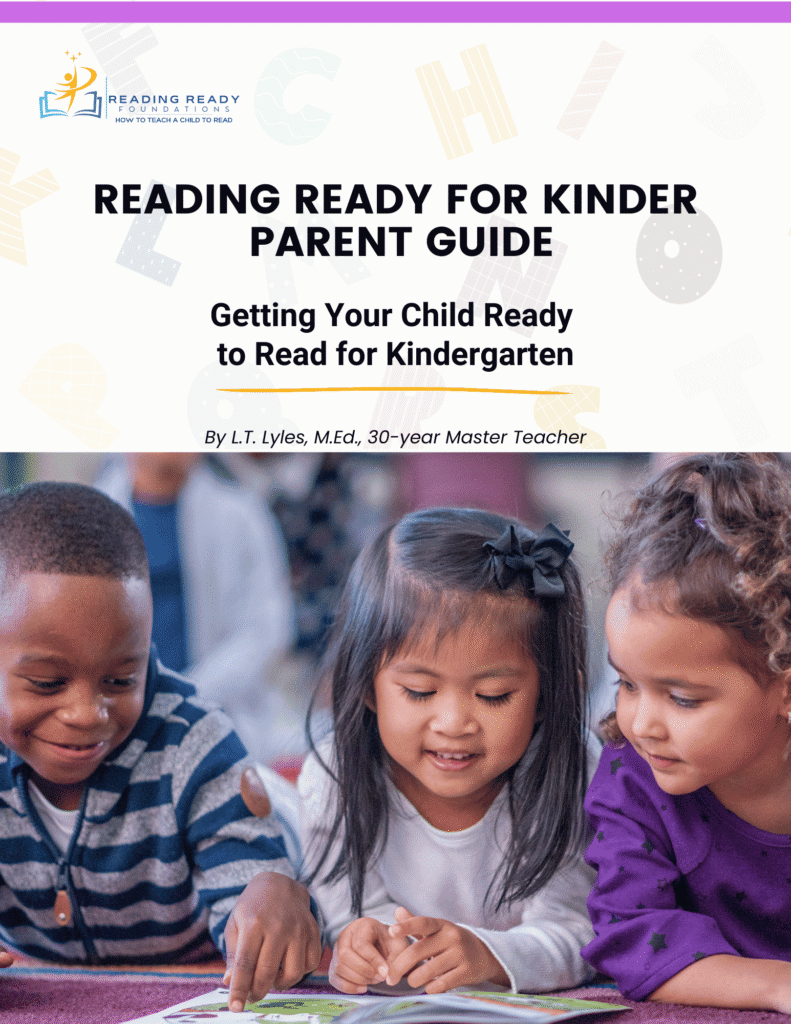
Download My Free Reading Ready for Kinder Parent Guide
About the Author:
L.T. Lyles, M.Ed., is the founder of Reading Ready Foundations and creator of Jumpstart Kinder. With over 30 years of experience as a classroom teacher, reading interventionist, and literacy consultant—she is passionate about equipping families with the tools to build confident readers from the ground up.