Skip to content


Why “What Is a Pre-Kindergarten, Pre-K Curriculum?” Matters
If you’ve ever typed “Pre-K activities” or “preschool printables” into Google or Pinterest, you already know how overwhelming early childhood ideas can be. One minute you’re looking for a simple alphabet game, and the next your screen is filled with themed packs, sensory bins, elaborate crafts, and color-coded schedules.
It’s easy to think: “Is this what a pre-kindergarten, Pre-K curriculum is supposed to be? Am I missing something?”
Here’s the truth:
A pre-kindergarten, Pre-K curriculum is not just a pile of activities. It’s a purposeful, developmentally appropriate plan that builds the skills your child truly needs before kindergarten—especially in early literacy and overall school readiness.
When parents search “what is a pre-kindergarten, Pre-K curriculum,” what they’re really asking is, “What learning experiences should I actually be giving my 2–5-year-old so they’re ready for school… and not accidentally falling behind?”
That’s the question we’ll answer here, in simple language, from the perspective of someone who has spent decades helping children learn to read and helping parents make sense of all the options. “The Ultimate Guide to Choosing a Preschool Homeschool Curriculum That Actually Builds Readers”
What Is a Pre-Kindergarten, Pre-K Curriculum?
Let’s define it clearly and simply:
A pre-kindergarten, Pre-K curriculum is an organized, step-by-step plan for what your child will learn in the year or two before kindergarten, and how you’ll help them learn it. In early childhood, this plan is about much more than worksheets; it’s about creating a learning environment and daily rhythm that help children grow socially, emotionally, and academically.
A strong pre-kindergarten, Pre-K curriculum usually includes:
- What to teach — key skills and concepts (early literacy, math, social-emotional skills, fine-motor, and more)
- When to teach it — a sequence or order that makes sense developmentally
- How to teach it — lessons, games, and hands-on experiences that fit young children
When you’re homeschooling or doing Pre-K at home, a pre-kindergarten, Pre-K curriculum should give you:
- A clear roadmap instead of random guessing
- Short, realistic activities you can actually fit into your day
- A way to know if your child is on track for school readiness or needs more time with a skill
The key difference between a true pre-kindergarten, Pre-K curriculum and random Pre-K “stuff” you find online is intentionality. A curriculum that encourages real growth is designed to move your child from point A to point B. A random collection of activities might be cute and fun, but it doesn’t necessarily prepare children for what comes next.

What Should a Pre-Kindergarten, Pre-K Curriculum Include?
When parents ask “what is a pre-kindergarten, Pre-K curriculum,” they often want a checklist. While every program is a little different, a strong Pre-K curriculum that encourages deep learning should include these components.
1. Early Literacy Foundations
This is the heart of a strong Pre-K year. A pre-kindergarten, Pre-K curriculum in early childhood should give children rich language and literacy experiences every day.
A pre-kindergarten, Pre-K curriculum should:
- Build phonological awareness
- Rhyming, clapping syllables, noticing beginning sounds
- Develop phonemic awareness
- Hearing and working with the individual sounds in words (like /c/ /a/ /t/)
- Teach letter names and sounds together
- Not just “This is M,” but “This is M, it says /m/, like ‘mmm’ in ‘mom.’”
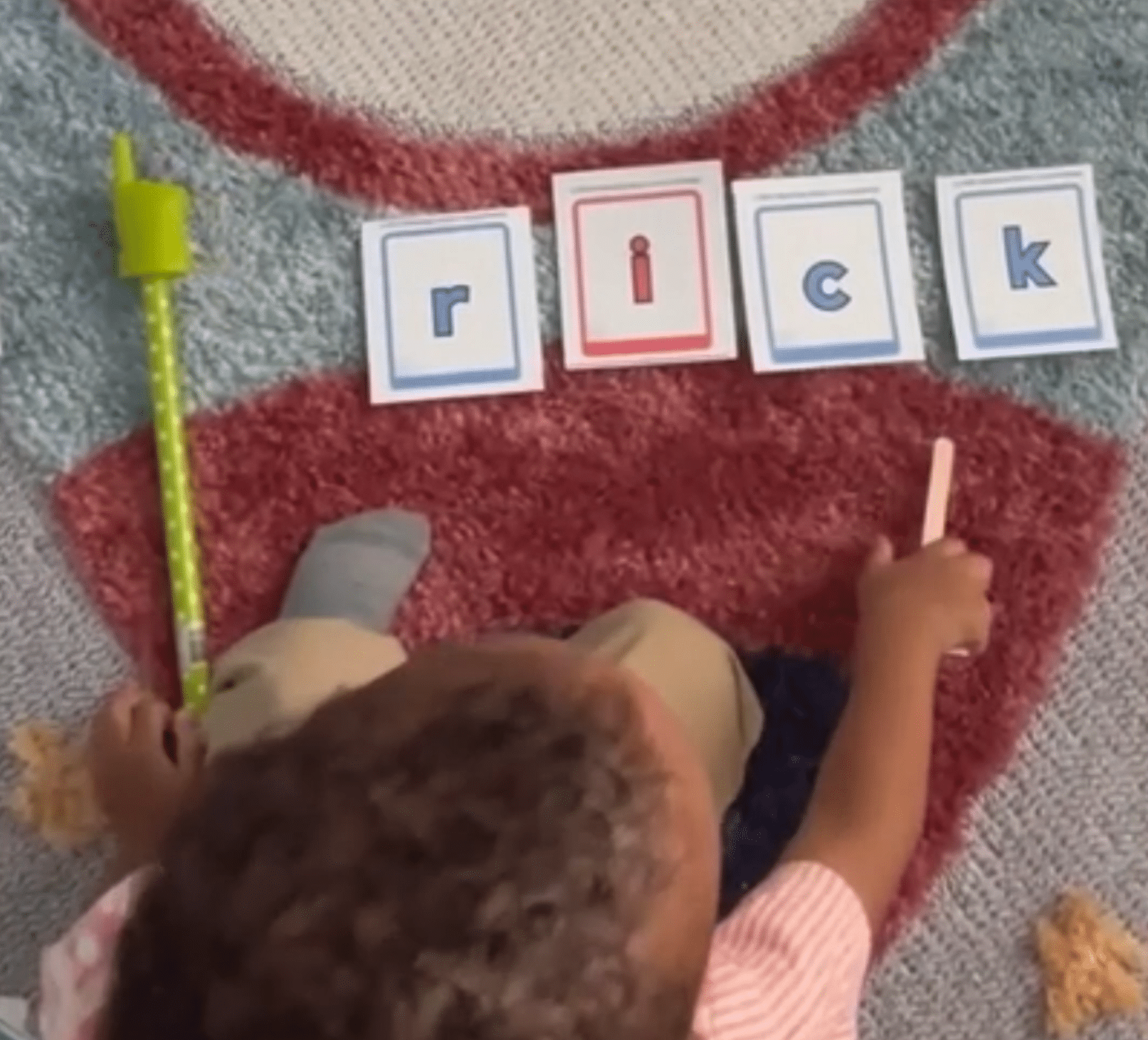
- Begin blending sounds into simple words
- Moving from /c/ /a/ /t/ to “cat”
- Introduce decodable reading when ready
- Simple books that match the sounds your child has learned
- Build oral language and comprehension
- Talking about stories, asking questions, retelling events
These language and literacy skills are exactly what I break down in detail in my pillar guide, because when a pre-kindergarten, Pre-K curriculum gets these right, your child enters kindergarten truly ready for kindergarten reading and beyond.
2. Early Math Concepts
A solid pre-kindergarten, Pre-K curriculum also supports early childhood math understanding in ways that feel playful and natural.
It should help children:
- Count objects and understand quantity
- Recognize and begin writing numbers
- Compare amounts (more/less, bigger/smaller)
- Notice simple patterns and shapes
You don’t need formal worksheets for every concept; many of these school readiness skills can be woven into everyday learning experiences and activities that prepare children for later math.
3. Fine Motor and Pre-Writing Skills
Before writing letters neatly, children need strong hands and coordination. A pre-kindergarten, Pre-K curriculum that encourages writing readiness should offer:
- Tracing, lacing, playdough, tweezers, and cutting with scissors
- Drawing lines and shapes, then letters
- Gradual practice writing their name and simple letters
These hands-on experiences in early childhood make pencil work easier and more comfortable when formal schooling begins.
4. Social-Emotional Skills
A good pre-kindergarten, Pre-K curriculum also thinks beyond academics, because school readiness is about the whole child.
It should give opportunities to:
- Take turns and share
- Follow simple directions and routines
- Name feelings and practice self-control
- Build confidence, independence, and resilience
These learning experiences make the transition to kindergarten smoother and help children feel secure in a new learning environment.

Pre-Kindergarten, Pre-K Curriculum vs. Pinterest Activities
Now we get to the big question behind all of this:
What is a pre-kindergarten, Pre-K curriculum… and how is it different from what I can just pull off Pinterest?
Pinterest can be a fun and inspiring place. You’ll find:
- Alphabet crafts
- Sensory bins
- Theme-based units (apples, farm, space, etc.)
- Holiday games and printables
None of these are “bad.” In fact, some of them can be wonderful additions to your early childhood learning environment. The problem is when Pinterest replaces a thoughtful pre-kindergarten, Pre-K curriculum instead of supporting it.
In my guide to preschool homeschool curriculum, I explain why random activities create gaps that show up later, and how a structured pre-kindergarten, Pre-K curriculum prevents those problems from ever starting.
Here’s the difference.
What Pinterest Activities Usually Give You
- Randomness — You might do an apple theme one week, a dinosaur theme the next, and a rainbow craft after that, with no clear skill progression.
- A focus on “cute” — The end product (a craft or worksheet) can look impressive, but the actual learning might be shallow.
- Lots of prep — Cutting, laminating, printing, shopping for supplies, and searching for “just the right” activity can become a time trap.
What a True Pre-Kindergarten, Pre-K Curriculum Gives You
- A skill-based plan — You know exactly which skills you’re building each week (like phonemic awareness, letter–sound knowledge, blending).
- Progression — Each lesson builds on the last. Your child doesn’t just meet letters once; they revisit and apply them.
- Clarity — You’re not guessing if you’ve “done enough” for reading this week. The plan tells you what matters most for school readiness.
- Less decision fatigue — Instead of asking “What should we do today?” you can look at the next step in your curriculum.
Read the full breakdown in “The Ultimate Guide to Choosing a Preschool Homeschool Curriculum That Actually Builds Readers” to see exactly why systematic instruction beats scattered activities every time.
A helpful way to think of it: A pre-kindergarten, Pre-K curriculum is the cake. Pinterest activities are the sprinkles. Sprinkles are lovely—but they’re not enough on their own.

How to Use Pinterest With a Pre-Kindergarten, Pre-K Curriculum
You don’t have to choose Pinterest or curriculum. You can absolutely have both, as long as you’re clear about your priorities.
Here’s how to make a pre-kindergarten, Pre-K curriculum your anchor, and Pinterest your helper.
Step 1: Let the Curriculum Lead
Start by choosing or using a pre-kindergarten, Pre-K curriculum that clearly shows:
- The scope and sequence (what skills you’ll teach and in what order)
- How it builds towards kindergarten readiness, especially in early reading
This is one of the key features I teach parents to look for in a preschool homeschool curriculum that actually helps children become confident readers.
Step 2: Use Pinterest to Reinforce Specific Skills
Instead of searching “Pre-K ideas,” search for the skill you’re working on, such as:
- “Rhyming games for preschool”
- “Letter M multisensory activity”
- “Blending words CVC game”
This way, the activities you find are supporting what your pre-kindergarten, Pre-K curriculum is already teaching—not sending you in twenty different directions.
Step 3: Say Yes to Simple, No to Overwhelm
When you’re using a structured pre-kindergarten, Pre-K curriculum, the core learning is already handled. Any extra Pinterest activities are a bonus, not a requirement.
Ask yourself:
- Does this activity support a skill we’re working on?
- Can I set it up in under 5–10 minutes?
- Will it feel fun for my child—or just Instagram-worthy for me?
If it passes those tests, great. If not, it’s safe to skip. Your child will not miss out.
What a Day With a Pre-Kindergarten, Pre-K Curriculum Can Look Like
You might be wondering how a pre-kindergarten, Pre-K curriculum fits into your real life—especially if you’re also caring for other children, working, or juggling a busy home.
Here’s a simple example of how it might look when you use a structured, developmentally appropriate curriculum as your base and sprinkle in a few extra ideas when they truly help.
Morning (5–10 Minutes)
- Follow your pre-kindergarten, Pre-K curriculum’s short literacy lesson:
- A quick phonological awareness game (rhyming or syllable clapping)
- Introduce or review a letter and its sound with a little movement or action
- Maybe add a simple Pinterest idea that matches (like a tray of objects that start with that sound).
These quick language and literacy activities that prepare your child for reading still feel like play.
Midday (5 Minutes)
- Do a hands-on math or fine-motor activity from your curriculum.
- Keep it simple: counting blocks, tracing in sand, matching numbers to objects.
These are small but powerful learning experiences that help prepare children for more formal math work later.
Afternoon (5–10 Minutes)
- Play a sound game: “Robot Talk” (you say /c/ /a/ /t/, your child says “cat”).
- Talk about what you noticed: “You blended those sounds so quickly—that’s how children learn to read big words later on.”
Bedtime (5–10 Minutes)
- Read a favorite book and ask one or two questions: “What do you think will happen next?” “How did the character feel?”
- Sing a rhyming song or nursery rhyme.
These calm, connected moments are part of a creative curriculum of family routines that encourage a love of language and literacy.
That’s it. A pre-kindergarten, Pre-K curriculum doesn’t need to turn your day into “school.” It should fit into your life in short, focused bursts that build real skills over time. This realistic daily structure is exactly what I outline for parents choosing a preschool homeschool curriculum.

Signs You’ve Chosen a Strong Pre-Kindergarten, Pre-K Curriculum
When you’re evaluating options—or your own plan—here are green flags that your pre-kindergarten, Pre-K curriculum is truly doing its job and offering developmentally appropriate learning experiences:
- It talks clearly about phonological and phonemic awareness, not just “fun literacy.”
- It teaches letters and sounds together, and gives you ideas for multi-sensory, hands-on experiences.
- It shows you how to move from sounds → letters → blending words → simple reading → early writing.
- It encourages short, age-appropriate lessons, not long sit-down sessions.
- It reassures you that going at your child’s pace is not only allowed but expected.
- It gives you clear guidance, instead of assuming you know how to “fill in the gaps” yourself.
These are the exact “must-have” features I teach parents to demand in my guide. If you’re ever unsure, you can go back to the question: “Does this pre-kindergarten, Pre-K curriculum actually help children become readers, or is it mostly about looking busy and cute?”
So… What Is a Pre-Kindergarten, Pre-K Curriculum for You?
At the end of the day, your pre-kindergarten, Pre-K curriculum should feel like:
- Support, not pressure
- Clarity, not confusion
- Connection, not constant comparison
It doesn’t have to be perfect. It does need to be intentional.
You can absolutely enjoy beautiful themes, seasonal crafts, and fun sensory bins. But let those be the extras. Let your true pre-kindergarten, Pre-K curriculum be the thoughtful, creative curriculum that:
- Builds phonological and phonemic awareness
- Teaches letters and sounds in a brain-friendly way
- Gently leads your child into blending, reading, and writing
- Respects your child’s pace and your family’s reality
- Offers activities that prepare your child socially and academically to be truly ready for kindergarten
From there, every Pinterest idea you choose becomes a tool—not a distraction.
Ready to choose your perfect pre-kindergarten, Pre-K curriculum?
Start with my complete guide: “The Ultimate Guide to Choosing a Preschool Homeschool Curriculum That Actually Builds Readers”
Take the next step in your child’s literacy journey with confidence
Download My Free Reading Ready for Kinder Parent Guide
L.T. Lyles, M.Ed., is the founder of Reading Ready Foundations and creator of Jumpstart Kinder. With over 30 years of experience as a classroom teacher, reading interventionist, and literacy consultant—she is passionate about equipping parents with the tools to build confident readers from the ground up.