Skip to content
The Kindergarten Reading Curriculum
How to Build Strong Readers Before They Ever Struggle
A strong kindergarten reading curriculum is one of the most powerful predictors of a child’s long-term academic success. Long before children encounter reading comprehension tests, chapter books, or written responses, their reading foundation is being formed—often quietly, and often much earlier than parents realize.
Yet many families enter kindergarten unsure of what their child should know, what skills truly matter, or how to support reading development at home without pressure or confusion. Some children arrive already reading at a basic level. Others arrive behind, even though no one ever warned their families that gaps were forming.
The truth is this: reading struggles don’t suddenly appear in third or fourth grade. They begin years earlier, when foundational skills are missed, rushed, or misunderstood. A well-designed kindergarten reading curriculum can prevent those struggles before they ever take root.
After more than 30 years as a classroom teacher, reading specialist, and regional literacy consultant, I’ve seen firsthand how the right curriculum changes lives—and how the wrong approach can quietly set children up for frustration.
This article will walk you through what truly matters in a kindergarten reading curriculum, what is often missing, and how families can confidently support early reading at home—without worksheets, stress, or guesswork.
Why the Kindergarten Reading Curriculum Matters More Than Ever
Kindergarten used to be about songs, stories, and play. Today, expectations are higher, pacing is faster, and children are often expected to perform academic tasks in their first few months of school. Reading time in the classroom is more structured than ever—and the pressure on kindergarteners to perform is real.
A quality kindergarten reading curriculum does not mean pushing children to read early at all costs. Instead, it means building the right skills in the right order, honoring how young brains learn language. When this sequence is followed, children develop confidence, curiosity, and a love of reading. When it isn’t, they may memorize words, rely on guessing strategies, or avoid reading altogether.
What I’ve seen over decades in schools is this pattern:
- Children who master foundational skills early rarely struggle later.
- Children who miss those skills often struggle silently for years.
- Intervention becomes harder—and more emotional—the longer gaps are ignored.
The kindergarten year is a critical window. A thoughtful kindergarten reading curriculum doesn’t just teach reading—it prevents future failure and sets the stage for grade level achievement across every subject, including math curriculum and science curriculum.

What a Strong Kindergarten Reading Curriculum Actually Includes
Many parents assume a kindergarten reading curriculum is simply learning letters and sight words. While those pieces matter, they are only part of the picture.
A complete, research-aligned curriculum for kindergarten includes five essential components. Understanding these skills of reading will help you evaluate any reading program, formal curriculum, or kindergarten homeschool approach you choose for your child.
1. Phonemic Awareness
Phonemic awareness is the ability to hear, identify, and manipulate sounds in spoken words. This is an oral skill—not a worksheet skill. It forms the strong foundation that all future phonics instruction builds upon.
Children need repeated opportunities to:
- Hear sounds in words
- Blend sounds together
- Break words apart
- Play with rhymes and word patterns
In my experience, phonemic awareness is the most overlooked skill—and the most critical. Children who struggle with reading almost always show early weaknesses here.
2. Letter–Sound Knowledge (Phonics Foundations)
Knowing letter names is helpful, but knowing letter sounds is essential. A phonics-based, explicit and systematic approach to letters and sounds is what the science of reading consistently supports. The best reading curriculum for kindergarten will always prioritize structured phonics instruction over memorization-based methods.
A strong kindergarten reading curriculum should:
- Introduce letters and sounds systematically
- Use multisensory practice (movement, touch, listening, speaking)
- Focus on mastery, not speed
Children don’t need to rush through the alphabet. They need time to connect sounds to symbols in meaningful ways. A phonics curriculum that is open-and-go for parents—requiring no special training or scripted lessons to deliver—makes this process far more accessible at home.
3. Print Awareness and Concepts of Print
Children must understand how print works. This includes:
- Knowing books have a front and back
- Understanding that print carries meaning
- Recognizing that we read left to right
- Identifying words and spaces
These skills are often learned naturally through shared reading—but only if reading is intentional and interactive. Picture books, read-alouds, and great books read together at home are among the most powerful tools a child will ever have.
4. Vocabulary and Oral Language
Children should also be taught to understand what they read. A high-quality kindergarten reading curriculum intentionally builds vocabulary and reading comprehension through:
- Rich conversations
- Read-alouds
- Story retelling
- Asking and answering questions
Children from language-rich environments often develop these skills naturally. Others need purposeful exposure to new words and concepts to keep pace. Teaching reading comprehension at the kindergarten level doesn’t require flashcards or formal drills—it happens through everyday conversation and story.
5. Early Reading and Word Building
Actual reading in kindergarten should be gentle, supported, and confidence-building. This means:
- Decodable words and simple texts
- Blending sounds, not memorizing words
- Celebrating effort, not perfection
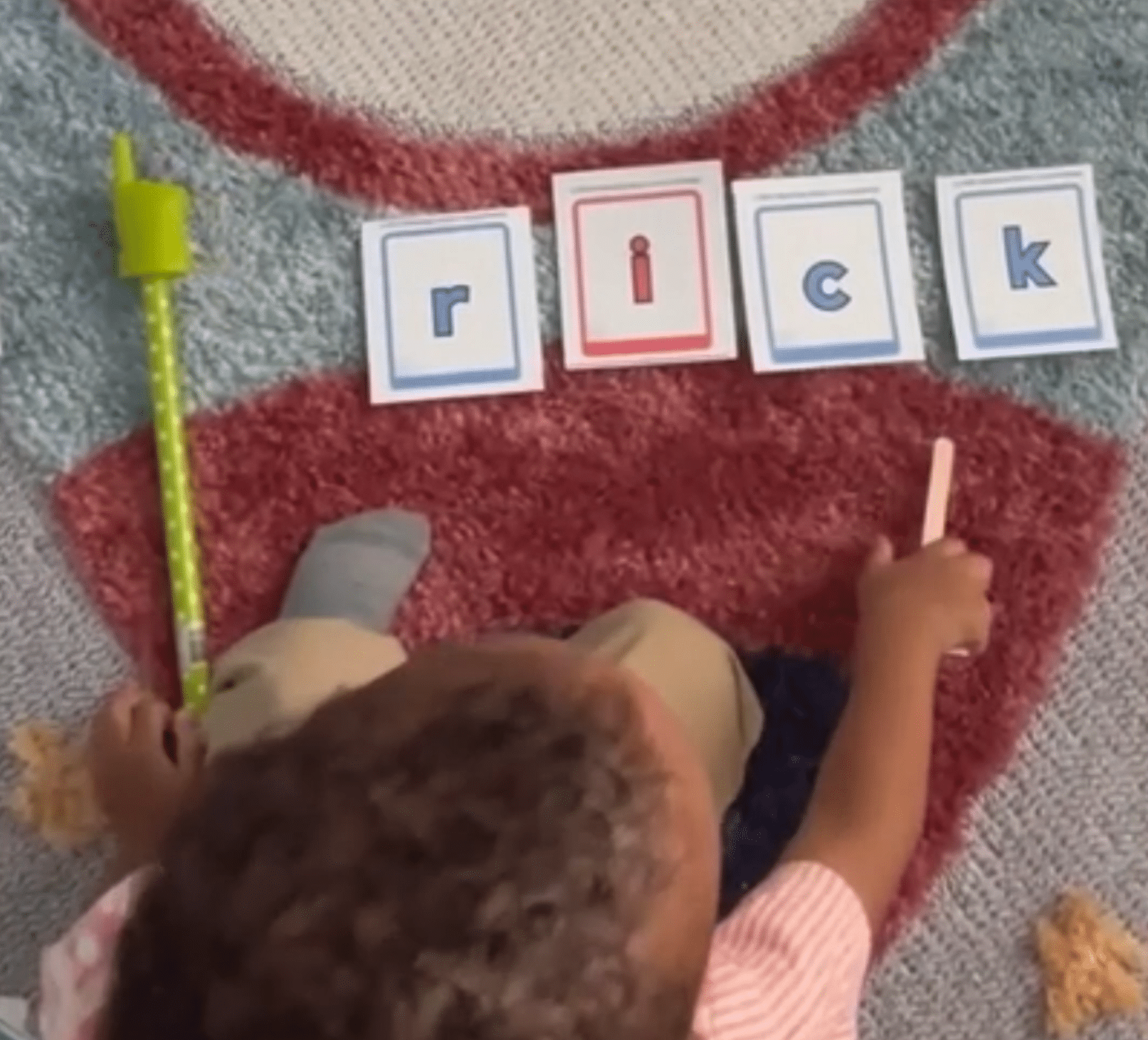
Decodable readers at level one are ideal for early practice. They allow a kindergartener to read and spell simple words using phonics patterns they’ve already learned—building reading fluency and confidence simultaneously. A strong reading program includes these from the very start.
Patience, support, and consistency are key to help develop the right habits.

What’s Often Missing from Kindergarten Reading Curriculum Programs
Despite good intentions, some kindergarten reading curriculum programs fall short in key areas. Over the years, I’ve noticed several common problems—whether in a school setting, a formal curriculum purchased by homeschool moms, or a kindergarten reading program used at home.
Overemphasis on Sight Words
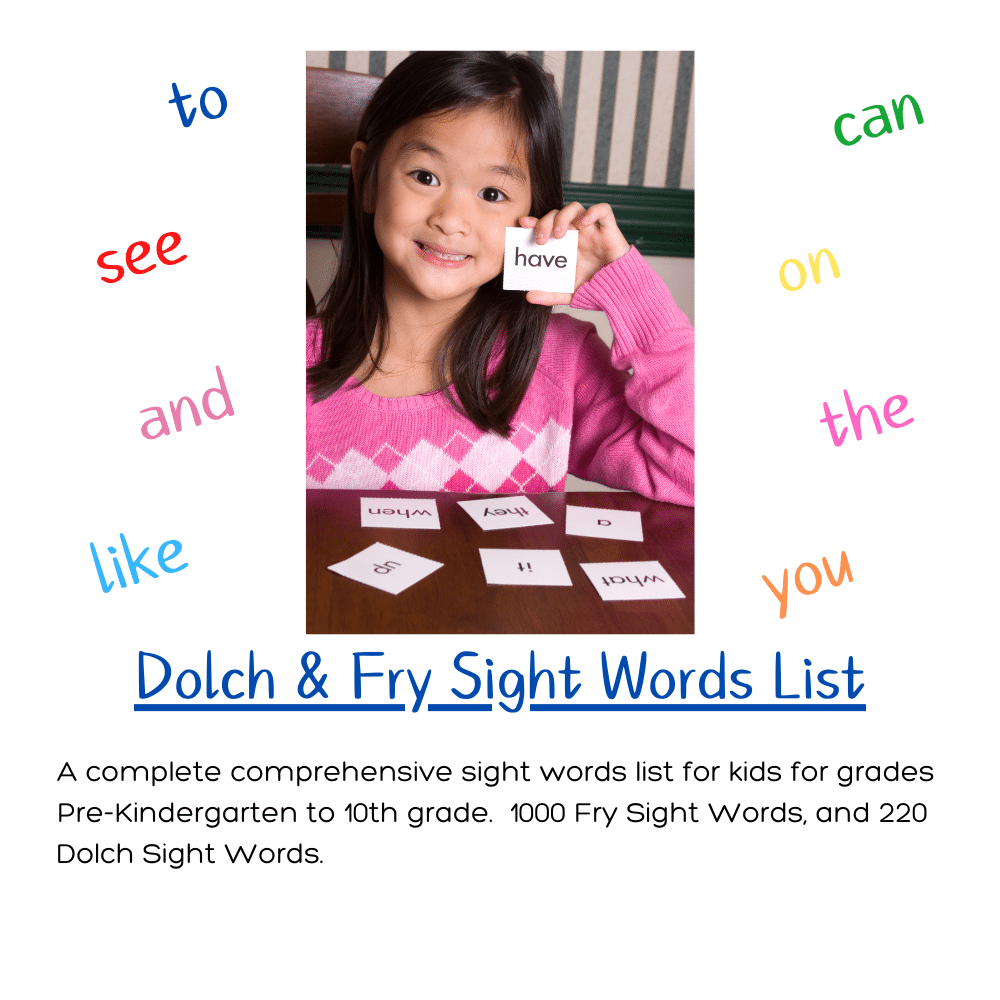
Sight words are useful—but they should not replace phonics instruction. When children are asked to memorize words without understanding how sounds work, they rely on guessing strategies that eventually fail. The best curriculum for reading teaches children to read and spell through decoding, not memorization.
Lack of Explicit and Systematic Reading Instruction
A reading program that lacks a clear, explicit and systematic sequence leaves children with gaps they may not show until second or third grade. Approaches inspired by Orton-Gillingham and structured literacy exist precisely because kids learn best when reading instruction follows a logical, cumulative order. The right reading approach never skips steps.
Lack of Developmental Understanding
Some programs expect five-year-olds to sit, write, and complete paper tasks far beyond what their brains and bodies are ready to handle.
Learning to read at this age should be active, playful, and engaging—not forced.
Minimal Family Involvement
Many kindergarten reading curriculum programs assume learning happens only at school. But the most successful readers are supported at home through simple, consistent reading lessons and activities that reinforce classroom learning.
How to Choose the Best Reading Curriculum for Kindergarten
Parents searching for the best reading curriculum for kindergarten—whether for a homeschool curriculum, a supplement to classroom instruction, or a standalone kindergarten reading program—are often overwhelmed by choices. A program like Reading Eggs, Explode the Code, or an Orton-Gillingham phonics program each takes a different approach to teaching reading.
The best curriculum for kindergarten reading will be:
- Phonics-based and explicit and systematic — grounded in the science of reading, not guessing strategies
- Multisensory — incorporating movement, touch, and listening to match every learning style
- Open-and-go — easy to implement without scripted lessons or advanced training
- Developmentally appropriate — designed for kindergarteners at the kindergarten level, not early first-graders
- Comprehensive — a reading program includes phonemic awareness, phonics, vocabulary, reading fluency, and reading comprehension
- Family-friendly — ideal for homeschool moms, classroom teachers, and parents working one-on-one with their child
A great approach to teaching reading always leaves room for flexibility based on how a child responds. A homeschool reading curriculum has a particular advantage here—it can be adjusted in real time to match exactly where your child is.
Whether you are part of the homeschooling community, supplementing school at home, or simply looking for a structured kindergarten program to use a few times a week, the right reading instruction makes an enormous difference. Homeschoolers and classroom families alike have seen children go from struggling to confident when the approach to teaching matches how that child actually learns.
The Role of Parents in a Kindergarten Reading Curriculum

One of the biggest myths in education is that parents need formal, expert-level training to teach reading. They don’t.
What parents need is:
- Clear guidance
- Simple activities
- Confidence that they are doing enough
In my 30 years in education and working with families, I’ve learned that parents want to help. But they’re often afraid of doing something wrong.
The truth is that short, meaningful reading lessons matter far more than expensive, non-evidence based programs or long lessons.
A strong kindergarten reading curriculum invites parents in, instead of pushing them away with jargon and overwhelm.
What I’ve Learned from 30 Years in Literacy Education
I’ve worked with thousands of children across classrooms, districts, and communities. I’ve sat in intervention meetings, coached teachers on their approach to teaching reading, and supported families whose children were already struggling.
What stands out most is this:
Nearly every struggling reader I’ve met could have been supported earlier—with the right kindergarten reading curriculum and guidance at home.
Reading difficulties are rarely about intelligence or effort. They are about missed foundations.
I’ve also seen the opposite: children who received intentional early support often soar—not just in reading, but in confidence. These experiences shaped my belief that families deserve access to clear, effective, and developmentally sound reading instruction—before frustration sets in.
Why I Created Jumpstart Kinder
Jumpstart Kinder was born out of both professional experience and personal passion. As an educator, I saw too many families searching for answers after their child was already behind. As a grandmother, I wanted to ensure my own grandson had a good foundation and confident start with reading. I realized there was a gap.
Parents needed a kindergarten reading curriculum that:
- Explained what to do and why it matters
- Used simple, multisensory activities
- Required no special materials
- Built skills in the correct order
- Respected how young children learn
I also wanted to create a curriculum that works for everyone—classroom families, kindergarten homeschool families, and homeschoolers who use reading games, reading lessons, and hands-on activities as their primary homeschool curriculum approach.
Whether a family is already using a program like level one phonics readers or just getting started, Jumpstart Kinder meets them where they are.
Jumpstart Kinder was designed to bring the classroom foundation into the home in a way that feels doable and encouraging.
How Jumpstart Kinder Supports a Strong Kindergarten Reading Curriculum

Jumpstart Kinder is not about rushing children to read. This kindergarten reading program is about building a strong foundation from the ground up—the same way the best reading curriculum for kindergarten does in a structured classroom setting.
It is about:
- Building phonemic awareness step by step
- Strengthening letter-sound knowledge through letters and sounds practice
- Encouraging playful practice with reading games and picture books
- Supporting parents with clear, open-and-go guidance
- Building reading fluency through decodable readers and consistent reading time
Families using Jumpstart Kinder are not guessing what comes next. They are following a proven sequence aligned with how kindergarteners actually learn to read. This program is designed with the whole child in mind—every learning style, every pace, every starting point.
The curriculum provides a clear, explicit and systematic path—from pre-reading and phonemic awareness all the way through early word building and reading comprehension. A child will learn to decode new words, understand what they read, and approach every reading lesson with confidence.
Whether your child is:
- Preparing for kindergarten
- Currently in kindergarten
- Part of a homeschool curriculum at home
- Needing extra support with early reading skills
Jumpstart Kinder meets them where they are.
Signs Your Child Needs Extra Support in a Kindergarten Reading Curriculum
Some children naturally pick up early reading skills. Others need more reading time, repetition, and targeted support. You may want additional guidance if your child:
- Struggles to hear sounds in words
- Avoids reading activities or reading games
- Guesses words instead of sounding them out
- Has difficulty remembering letter sounds
- Is reading below their expected reading level
- Becomes frustrated quickly during reading lessons
These are not failures. They are signals. Early support makes an enormous difference—and kindergarten is the ideal time to provide it. An informal reading skills check can help you identify exactly where your child needs help, so you can choose the right reading instruction for them.
Many homeschoolers and classroom parents are surprised to discover that a few targeted changes to their reading program—like adding phonics instruction, or using a more structured homeschool reading curriculum—can shift a child’s trajectory in just a few weeks.
Building Confidence Alongside Skills
One of the most important outcomes of a strong kindergarten reading curriculum is confidence. Children who feel successful in their reading skills:
- Take risks with new words
- Enjoy picture books, great books, and free reading time
- Retell stories and strengthen reading comprehension naturally
- Believe they can learn—and keep going
Confidence grows when learning is paced correctly and celebrated often. That is the heart behind Jumpstart Kinder—and behind everything I’ve taught over the past 30 years.

Final Thoughts: A Strong Start Changes Everything
Reading is not just an academic skill. It shapes how children see themselves as learners. A thoughtful kindergarten reading curriculum builds more than readers—it builds confidence, curiosity, and lifelong learning habits that carry a child through every grade level to come.
Families don’t need to wait for problems to appear. Whether you’re a classroom parent, a homeschool mom, or a kindergarten homeschool family teaching everything at home alongside a math curriculum and science curriculum—the right reading support can begin right now, exactly where your child is.
If you’re looking for a clear, supportive way to help your child build strong reading foundations, Jumpstart Kinder was created for you—by someone who has spent a lifetime helping kindergarteners learn to read, and who believes every child deserves a good start.
Let’s build bright beginnings together.
Visit readingreadyfoundations.com to learn more and begin your Jumpstart Kinder journey today.
Take the next step in your child’s literacy journey with confidence
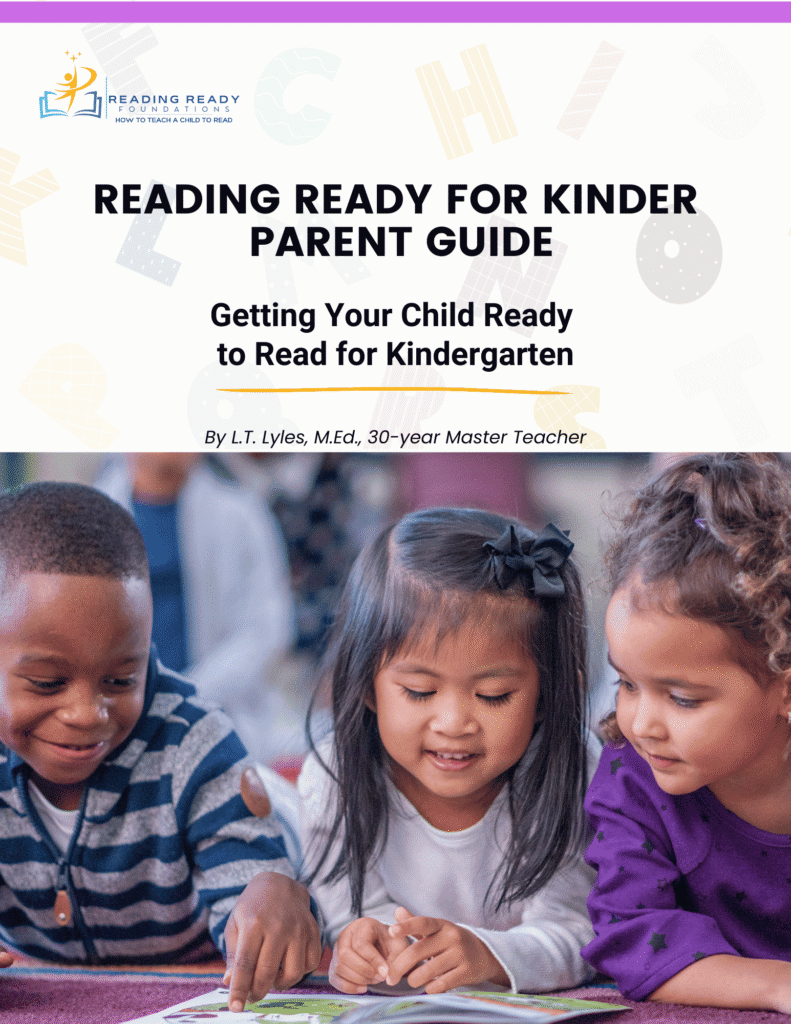
Download My Free Reading Ready for Kinder Parent Guide
About the Author
L.T. Lyles, M.Ed., is the founder of Reading Ready Foundations and creator of Jumpstart Kinder. With over 30 years of experience as a classroom teacher, reading interventionist, and literacy consultant—she is passionate about equipping families with the tools to build confident readers from the ground up.